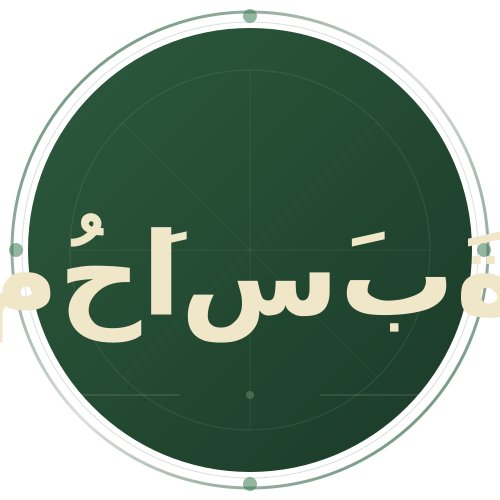
MashaAllah — مَا شَاءَ اللَّهُ — means “What Allah ﷻ has willed” or “This is what Allah ﷻ has willed.” It is an expression of admiration and gratitude that acknowledges Allah ﷻ as the source of whatever good is being appreciated. It is both a verbal act of worship and — in the Islamic understanding — a protection for the thing being admired from the evil eye.
The Quranic origin
The phrase comes directly from the Quran. In Surah Al-Kahf, a man with two gardens boasts to his companion, who responds: “If only you had said, upon entering your garden: MashaAllah, there is no power except with Allah ﷻ.” (Quran 18:39). The Quran uses it in the context of admiring something — a garden, a blessing, a good thing — as the correct response: to acknowledge that what exists does so by Allah’s ﷻ will, not through one’s own power or luck. This Quranic context gives MashaAllah its Islamic weight beyond being a cultural phrase.
When to say it
MashaAllah is said when admiring or complimenting something — a child, a home, an achievement, good health, a beautiful scene. The Islamic teaching is that saying it when you admire something protects what is being admired from the evil eye (al-ayn). The Prophet ﷺ established that the evil eye is real (Bukhari 5740) and that admiration without the acknowledgement of Allah ﷻ can cause harm. Saying MashaAllah explicitly attributes the good thing to Allah’s ﷻ will and provides protection from any harmful effect of the admiring gaze.
It is also used when someone shares good news — a new job, a marriage, a baby, an exam result. Rather than replying with congratulations alone, the Muslim says MashaAllah to acknowledge the divine source of the blessing and to protect it.
MashaAllah vs Alhamdulillah
MashaAllah is said when admiring something from outside — seeing something good and acknowledging Allah ﷻ as its source. Alhamdulillah is said in gratitude for something received — acknowledging Allah ﷻ for a blessing in your own life. When your friend shows you their new home: MashaAllah. When you receive good news yourself: Alhamdulillah. The distinction is the direction of the acknowledgement — outward appreciation (MashaAllah) versus personal gratitude (Alhamdulillah).
Frequently Asked Questions
What does MashaAllah mean in English?
“What Allah ﷻ has willed” — an expression of admiration that acknowledges Allah ﷻ as the source of whatever is being appreciated. It comes from Quran 18:39. In practice it is said when complimenting or admiring anything — a person, an achievement, a place, a blessing — as both an act of acknowledgement and a protection from the evil eye.
Does saying MashaAllah protect from the evil eye?
Yes — this is the Islamic understanding rooted in Quran 18:39 and the prophetic teaching on the evil eye. Admiration without acknowledging Allah ﷻ can carry harmful energy (the evil eye). Saying MashaAllah explicitly attributes the good to Allah’s ﷻ will, deflecting the potential harm of admiration and protecting what is being admired. This is why Muslims traditionally say it when complimenting children, homes, or any blessing belonging to others.
MashaAllah is not a cultural habit — it is Quranic instruction. See something good. Acknowledge its source. That is the entire practice.